You finally start feeling better. The stiffness has eased, your movement feels more comfortable, and you are getting back into your usual routine. Then, seemingly out of nowhere, the same pain returns.
Perhaps it is your lower back after a long day at work, your shoulder during a gym session, or your neck after spending hours at a computer.
If this sounds familiar, you are certainly not alone.
Recurring muscle and joint pain can be frustrating, particularly when you feel as though you have already dealt with the problem. You might begin wondering whether something is permanently damaged, whether you should stop exercising, or why previous treatment only seemed to provide temporary relief.
The reality is that musculoskeletal pain is often more complex than a single tight muscle or stiff joint. Several factors can contribute to symptoms returning, including changes in activity levels, physical conditioning, recovery, movement habits and the way your body responds to pain.
Understanding these factors can be an important part of finding a more sustainable approach to managing discomfort.
At Empowered Health Chiropractic in Geelong, we believe that improving strength, maintaining movement and incorporating appropriate rehabilitation can play an important role in managing many recurring musculoskeletal problems.
Let’s look at why pain sometimes returns and what you can do about it.
Why Does Pain Keep Coming Back to the Same Area?
One of the most common questions people ask is, “Why does the same area keep hurting?”
There is rarely one simple explanation.
Pain can return when a previously irritated area is exposed to activities or demands that it is not currently managing comfortably. It may also occur when the factors contributing to the original episode have not changed significantly.
For example, someone experiencing lower back discomfort may feel better after reducing their activity for a few days. However, when they return to prolonged sitting, heavy lifting or exercise, their symptoms may return.
That does not necessarily mean they have caused another injury.
It may mean their symptoms are influenced by several factors that require a broader management approach.
Recurring pain can also occur without an obvious change in activity. Pain is influenced by the nervous system, previous experiences, sleep, stress and overall health, so symptoms do not always reflect the amount of tissue damage present.
An appropriate assessment can help identify possible contributing factors and determine whether additional investigation is necessary.
1. Your Strength May Not Match Your Daily Physical Demands
Muscles do more than help us lift weights or exercise. They contribute to our ability to perform everyday activities, including walking, carrying shopping, climbing stairs and working.
If your current physical capacity is lower than the demands you regularly place on your body, certain activities may become more difficult or uncomfortable.
For example, consider someone who has experienced recurring knee discomfort.
They may find walking on flat ground relatively comfortable but experience symptoms when climbing stairs, hiking or returning to running.
One possible contributing factor could be that their current strength and exercise tolerance are not sufficient for those activities.
Gradual strengthening may help improve their capacity to manage those demands.
The same principle can apply to other areas of the body, including the lower back, hips, shoulders and ankles.
However, weakness is not the cause of every painful condition. Strength is one aspect of physical function that may be worth assessing alongside other factors.
How Strength Training May Help
An appropriately designed strengthening programme can help improve muscular capacity, support joint function and build confidence with physical activity.
Depending on the area involved, rehabilitation may include resistance exercises, bodyweight movements, controlled lifting or functional exercises that reflect the demands of daily life.
The objective is not necessarily to lift heavier weights at the gym.
For some people, success might mean carrying their children more comfortably, returning to gardening or completing a normal workday with fewer limitations.
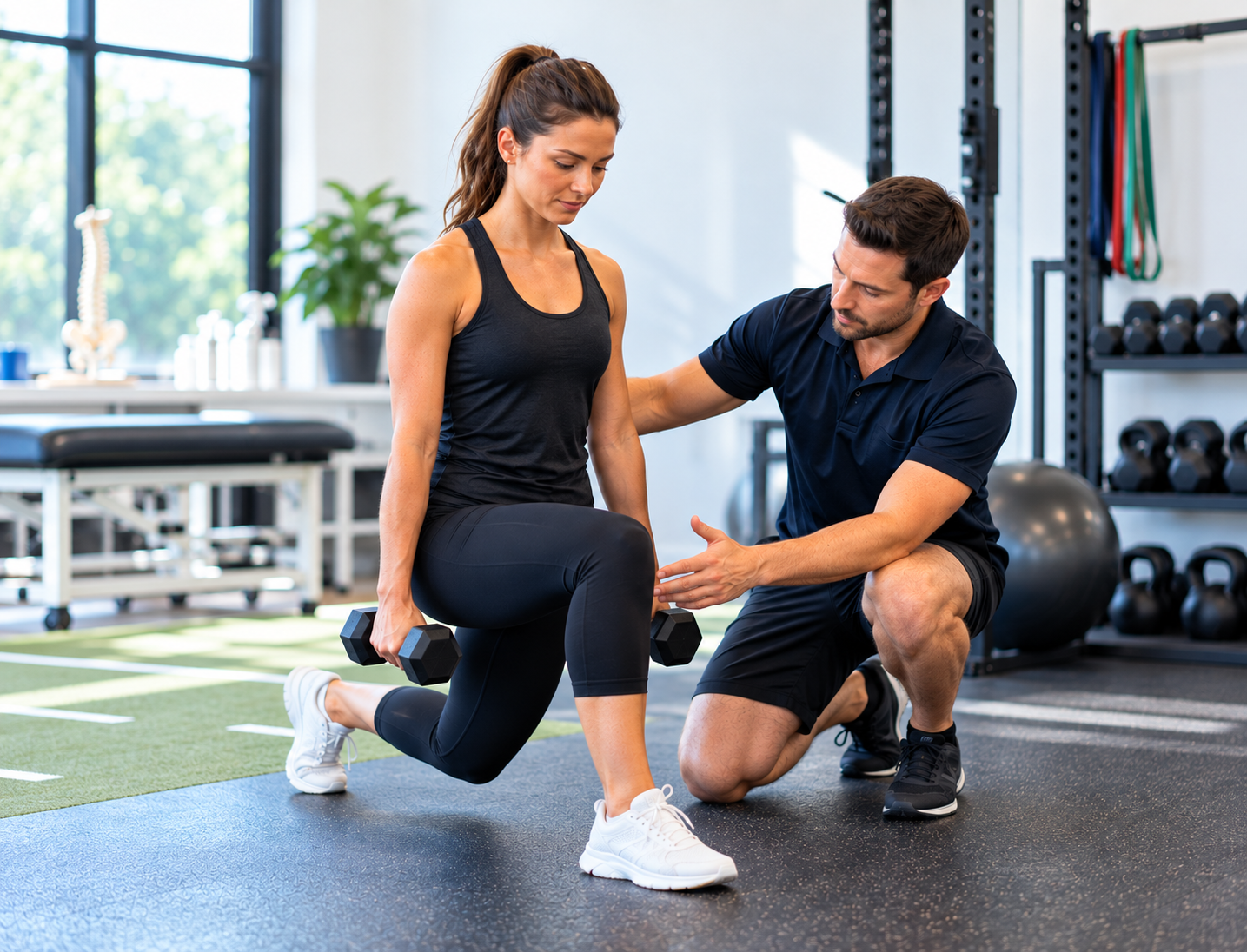
Our Gym Rehabilitation programme in Geelong focuses on using progressive exercise to support strength, movement and long-term physical function.
2. You May Be Doing Too Much, Too Soon
It is understandable to want to return to normal activity as soon as your pain improves.
However, one common challenge during recovery is increasing physical demands faster than your body can comfortably tolerate.
Imagine taking several weeks away from running because of an injury. Once your symptoms settle, you decide to complete the same running distance and intensity you were managing before the break.
Even if you feel reasonably comfortable at first, that sudden increase in activity may contribute to another flare-up.
This can also happen with gym training, physically demanding work or everyday activities such as gardening and home renovations.
The Importance of Progressive Rehabilitation
Progressive rehabilitation involves gradually building your tolerance to activity rather than immediately returning to your previous level.
For example, someone returning to strength training might initially use lighter resistance, fewer repetitions or a reduced training frequency.
As their symptoms, confidence and physical capacity improve, the demands can be increased.
The appropriate progression will vary depending on the individual, the condition being managed and their response to exercise.
The aim is to find a manageable level of activity and gradually build from there, rather than repeatedly cycling between doing too much and stopping altogether.
3. Rest May Help Symptoms Settle, but It Is Not Always the Complete Solution
Rest can be useful following certain injuries or during particularly uncomfortable periods.
However, prolonged avoidance of movement is not usually the best long-term strategy for many common musculoskeletal problems.
When we become less active, we can gradually lose strength, fitness and confidence in our ability to move.
This may make returning to normal activities more challenging.
For example, someone with recurring lower back pain may avoid bending, lifting or exercising because they are worried about triggering another episode.
While that response is understandable, ongoing avoidance can sometimes contribute to reduced physical capacity and increased concern about movement.
Many people benefit from finding ways to remain active within their individual tolerances.
This might involve walking, gentle mobility exercises, modified gym movements or gradually returning to everyday tasks.
According to Healthdirect Australia, physical activity, appropriate exercise and pacing can form important parts of chronic pain management.
The important distinction is that staying active does not mean ignoring severe symptoms or forcing yourself through every painful movement.
It means finding an appropriate balance between activity, recovery and gradual progression.
4. Your Movement Habits and Daily Routine May Be Contributing
Many people associate recurring pain with a particular activity, but the demands of everyday life may also be relevant.
Long periods of sitting, repetitive movements, manual work and sudden changes in physical activity can influence how muscles and joints feel.
For example, someone working at a computer may notice neck or shoulder discomfort towards the end of the day.
It is tempting to assume that poor posture is always the cause.
However, there is no single perfect posture that everyone needs to maintain.
The amount of time spent in one position, the frequency of movement breaks, general activity levels and individual physical capacity may all be relevant.
Similarly, someone performing repetitive lifting at work may benefit from reviewing how their workload is managed and whether their strength and endurance are appropriate for the task.
Small Changes Can Make a Difference
Rather than constantly trying to maintain an ideal position, it may be more useful to introduce regular movement throughout the day.
Changing positions, taking walking breaks and performing comfortable stretches or strengthening exercises may help reduce the amount of time spent in one posture.
For physically demanding activities, gradually improving strength and endurance may help increase your ability to manage repeated tasks.
The best approach depends on the person and the activities that matter to them.
5. Stress, Sleep and Recovery Can Influence Pain
Musculoskeletal pain is not influenced by physical activity alone.
Sleep quality, emotional stress, general health and recovery habits can also affect how we experience discomfort.
Poor sleep may increase pain sensitivity and make everyday activities feel more challenging.
Stress can influence muscle tension, concentration and the way the nervous system processes discomfort.
If you are experiencing a particularly demanding period at work, sleeping poorly and exercising less than usual, these factors may contribute to a change in your symptoms.
This does not mean your pain is imaginary or that stress is necessarily the primary cause.
Pain is a real experience influenced by multiple interacting systems.
Recognising the role of recovery can help you develop a more balanced management plan.
Regular sleep habits, appropriate physical activity, managing exercise demands and seeking support when needed may all form part of that approach.
Why Does Pain Return Even After Treatment?
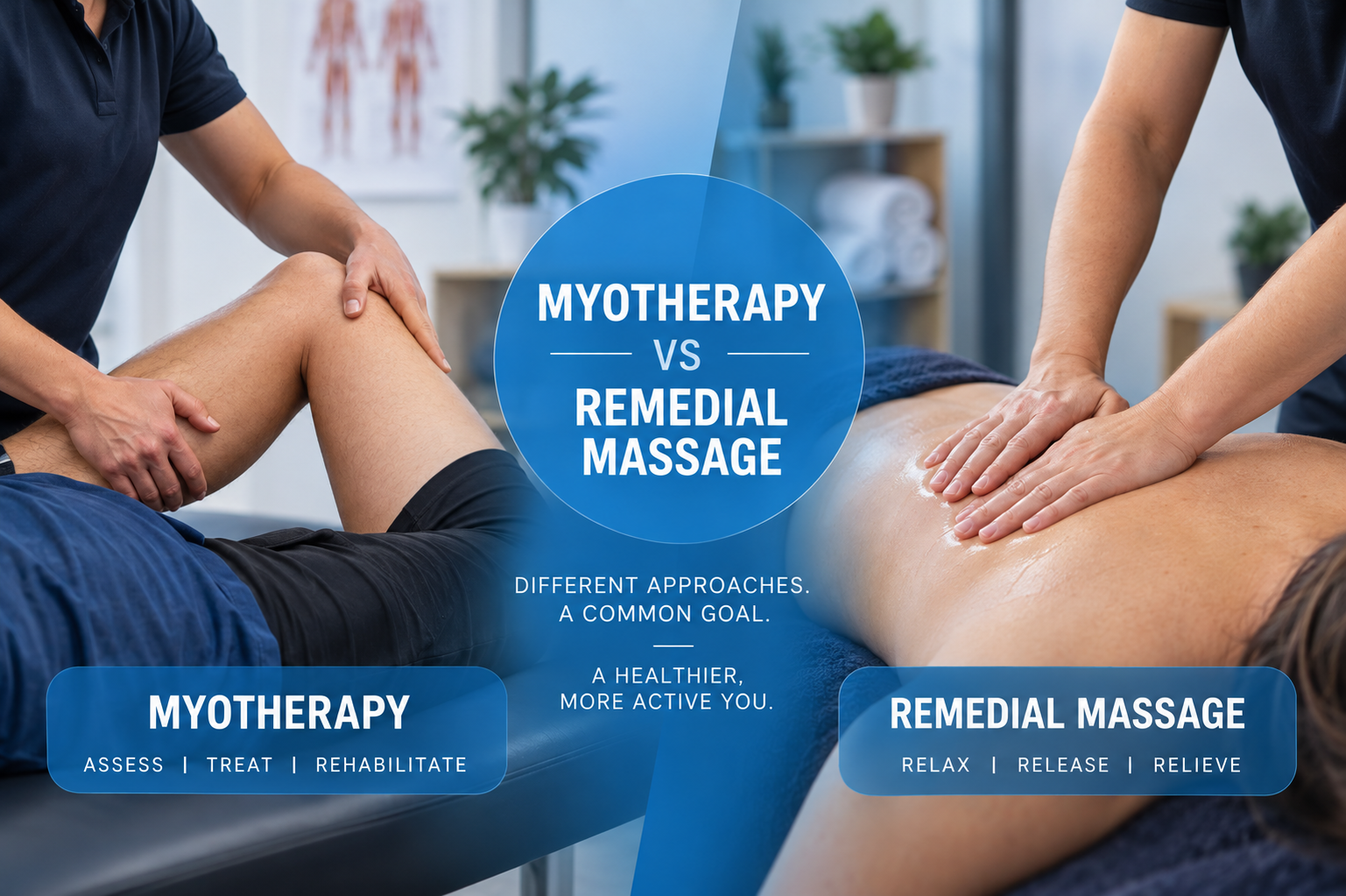
You might have previously received chiropractic care, massage, myotherapy or another form of hands-on treatment and noticed an improvement.
However, after several days or weeks, your symptoms returned.
Why does this happen?
Hands-on treatment may help manage pain, reduce discomfort or improve movement for some people. However, it may not address every factor contributing to the problem.
For instance, a person experiencing shoulder discomfort might feel more comfortable after treatment but continue performing activities that exceed their current shoulder capacity.
In that situation, exercises designed to improve strength and movement tolerance may be a useful additional component of care.
This is one reason why treatment and rehabilitation are often considered together.
At Empowered Health Chiropractic, our multi-modal chiropractic approach combines different treatment strategies based on individual needs rather than relying on a single technique.
Depending on the assessment, care may involve manual therapy, soft tissue techniques, dry needling, education and exercise rehabilitation.
Not every person needs every treatment. The aim is to select approaches that are appropriate for their particular presentation.
The Role of Strength Training in Managing Recurring Pain
Strength training can be an important component of rehabilitation for many musculoskeletal conditions.
Our bodies regularly adapt to the demands placed upon them.
When an exercise programme is appropriately planned and progressed, muscles can become stronger, physical capacity can improve and everyday movements may become easier to manage.
For example, strengthening exercises may be included in rehabilitation for people experiencing certain types of:
-
Lower back pain and stiffness
-
Neck and shoulder discomfort
-
Hip and knee pain
-
Tendon-related problems
-
Sports and exercise-related injuries
-
Muscle weakness following a period of reduced activity
-
Difficulty returning to normal physical tasks
The specific exercises should be chosen according to the individual’s condition, capabilities and goals.
For someone recovering from an ankle injury, rehabilitation may include calf strengthening and balance exercises.
For someone managing shoulder discomfort, it might involve exercises targeting the shoulder muscles and surrounding structures.
For recurring back pain, a programme may include strengthening, aerobic activity and functional exercises that build tolerance for activities such as lifting.
There is no single exercise that works for every person with recurring pain.
Do You Need to Go to a Gym?
Not necessarily.
Many rehabilitation exercises can be performed at home using bodyweight, resistance bands or simple equipment.
Others may benefit from supervised gym-based rehabilitation, particularly when they need help learning exercises, selecting suitable resistance or gradually progressing their programme.
What matters most is choosing an approach that is practical, appropriate and sustainable.
Movement Is About More Than Flexibility
When something feels tight or stiff, stretching is often the first thing people try.
Stretching may be useful in some circumstances, but it is not always the only or most important component of rehabilitation.
Movement also involves coordination, strength, confidence and the ability to perform activities under different levels of physical demand.
For example, someone may have sufficient hip flexibility but still experience difficulty with squatting because of strength, balance or movement tolerance.
Another person may feel uncomfortable lifting objects even though they can perform the movement without weight.
Rehabilitation can help address these different components.
Building Confidence With Movement
Recurring pain can sometimes make people hesitant to move.
They may begin avoiding particular exercises or activities because they associate them with previous discomfort.
A gradual rehabilitation programme may help rebuild confidence by introducing movements at an appropriate level of difficulty.
This might begin with simple exercises before progressing towards more demanding tasks.
For someone wanting to return to running, the process could eventually involve a combination of walking, strengthening exercises and gradually increasing running exposure.
For someone returning to physically demanding work, it may involve practising relevant lifting or carrying tasks.
The ultimate goal is to help people return to meaningful activities, not simply complete exercises in a treatment room.
Can You Exercise When You Have Pain?
In many cases, some form of physical activity is possible during recovery.
However, whether a particular exercise is suitable depends on the condition, the nature of the pain and any relevant medical considerations.
It is not always necessary for every movement to be completely pain-free.
Some rehabilitation exercises may produce mild, temporary discomfort without indicating further injury. However, pain that is severe, rapidly worsening or accompanied by concerning symptoms should not be ignored.
A healthcare professional can help you understand which activities may be appropriate and how to monitor your response.
It can also be helpful to consider how symptoms behave after an activity.
For example, discomfort that settles relatively quickly may be managed differently from symptoms that continue worsening or significantly affect function the following day.
Rather than using pain alone as the only measure, rehabilitation should also consider movement, function, recovery and your ability to perform everyday activities.
How Long Does Rehabilitation Take?
This is one of the most common questions people ask when beginning a rehabilitation programme.
Unfortunately, there is no universal timeframe.
Recovery and rehabilitation depend on several factors, including the type of condition, how long symptoms have been present, previous injuries, general health and the physical demands of everyday life.
Someone recovering from a recent minor injury may have different needs from a person experiencing recurring discomfort over several years.
Progress is also not always perfectly linear.
There may be periods when symptoms improve, followed by occasional flare-ups.
That does not automatically mean the entire rehabilitation process has failed.
It may mean the exercise programme, activity levels or management strategies need to be reviewed.
Measuring Progress Beyond Pain
Pain reduction can be an important goal, but it is not the only useful measure of progress.
Other improvements may include being able to walk further, lift more comfortably, complete work tasks, return to sport or feel more confident with previously avoided movements.
These changes can be meaningful even when occasional discomfort is still present.
When Should Recurring Pain Be Professionally Assessed?
If discomfort keeps returning to the same area, it may be worth seeking an assessment rather than repeatedly managing the symptoms on your own.
An assessment may be especially useful if pain is interfering with work, exercise, sleep or everyday activities.
You should also seek advice if symptoms are changing, gradually worsening or becoming more difficult to manage.
Recurring pain can have many causes, including conditions that require medical investigation rather than manual therapy or exercise alone.
Seek prompt medical attention for severe or progressive weakness, significant trauma, fever with unexplained pain or other concerning symptoms.
New loss of bladder or bowel control, numbness around the groin or saddle area, or rapidly developing neurological symptoms require urgent medical assessment.
How Empowered Health Chiropractic Approaches Recurring Pain
At Empowered Health Chiropractic, we recognise that recurring musculoskeletal pain can involve more than one contributing factor.
Our approach begins with understanding your symptoms, health history, activity levels and personal goals.
Depending on your presentation, an assessment may consider joint mobility, muscle function, strength, movement patterns and other relevant clinical findings.
Treatment is then tailored to your needs.
This may involve chiropractic manual therapy, soft tissue techniques, exercise rehabilitation and education to help you better understand and manage your symptoms.
For people experiencing muscle-related discomfort, Myotherapy in Geelong may also be considered as part of an appropriate management plan.
People dealing with exercise-related injuries or recurring problems during training may benefit from learning more about our Sports Chiropractic service.
Our aim is to help people develop a better understanding of their condition while supporting movement, physical function and confidence with everyday activities.
Taking a Longer-Term Approach to Musculoskeletal Health
If pain keeps returning, it is natural to focus on finding something that makes it settle as quickly as possible.
However, it can also be useful to consider what may help you manage the problem over time.
For many people, this means gradually improving strength, remaining appropriately active, managing physical demands and developing practical strategies for occasional flare-ups.
It does not necessarily mean that every episode of pain can be prevented.
Musculoskeletal symptoms can fluctuate, and some conditions require ongoing management.
The objective is to develop the knowledge, confidence and physical capacity to manage everyday activities as comfortably and independently as possible.
Sometimes, the most valuable progress is not simply experiencing less pain today, but being better prepared for the physical demands of tomorrow.
Frequently Asked Questions
Why does my muscle or joint pain keep coming back?
Recurring pain can be influenced by several factors, including changes in physical activity, exercise tolerance, previous injuries, sleep, stress and underlying musculoskeletal conditions. An assessment can help identify potential contributing factors and determine an appropriate management approach.
Does recurring pain mean I have permanently damaged something?
Not necessarily. Recurring pain does not automatically indicate ongoing or permanent tissue damage. Pain is influenced by the nervous system and many physical and lifestyle factors. However, persistent or changing symptoms should be assessed to rule out conditions that require additional investigation.
Can strengthening exercises help prevent pain from returning?
Strengthening exercises may help improve physical capacity and support rehabilitation for many musculoskeletal conditions. However, no exercise programme can guarantee that pain will never return. The type and intensity of exercise should be appropriate for the individual.
Should I stop exercising if my pain comes back?
Not always. Depending on the condition, modifying exercise intensity, duration or movement selection may be more appropriate than stopping all physical activity. If symptoms are severe, worsening or unusual, seek professional advice before continuing.
Is stretching enough for recurring muscle pain?
Stretching may be useful for some people, but recurring muscle pain can involve more than flexibility. Strength, activity tolerance, recovery and other factors may also need to be considered. An individual assessment can help determine whether additional rehabilitation strategies may be appropriate.
Is chiropractic treatment enough for recurring pain?
Some people benefit from manual therapy, but rehabilitation and self-management strategies may also be important depending on the condition. Combining appropriate treatment with exercise, movement and education can provide a broader approach to managing recurring musculoskeletal symptoms.
How often should I perform rehabilitation exercises?
Exercise frequency depends on the condition, the exercises prescribed, your current ability and how your body responds. Some activities may be appropriate most days, while more demanding strengthening exercises may require additional recovery. A personalised programme can help determine a suitable schedule.
Can I start strength training if I have never been to a gym?
Yes, many people begin strengthening exercises without previous gym experience. Rehabilitation can start with simple bodyweight movements or resistance bands before progressing to more demanding activities. The appropriate starting point depends on individual needs and any existing injuries or medical conditions.
How do I know whether I need gym rehabilitation?
Gym rehabilitation may be worth considering if recurring pain, weakness, reduced movement confidence or physical limitations are affecting your ability to exercise or complete everyday activities. A professional assessment can help determine whether a structured programme is suitable.
When should I see a chiropractor for recurring pain?
If muscle or joint pain repeatedly returns, limits movement or interferes with your daily activities, a chiropractor may be able to assess the musculoskeletal aspects of your symptoms and discuss suitable management options. If another type of healthcare is more appropriate, a referral may be recommended.
Looking for Help With Recurring Pain in Geelong?
If the same muscle or joint pain keeps interrupting your work, exercise or everyday routine, it may be time to look beyond simply settling the latest flare-up.
At Empowered Health Chiropractic, we take a personalised approach to assessing musculoskeletal concerns and supporting movement, strength and rehabilitation.
Whether you are managing recurring discomfort, returning to exercise after an injury or looking to improve your physical capacity, our Geelong team can discuss appropriate treatment and rehabilitation options.
Learn more about our Gym Rehabilitation service or our Multi-Modal Chiropractic Care approach.
Book Your Appointment Today
https://empoweredhealthchiropractic.com.au/