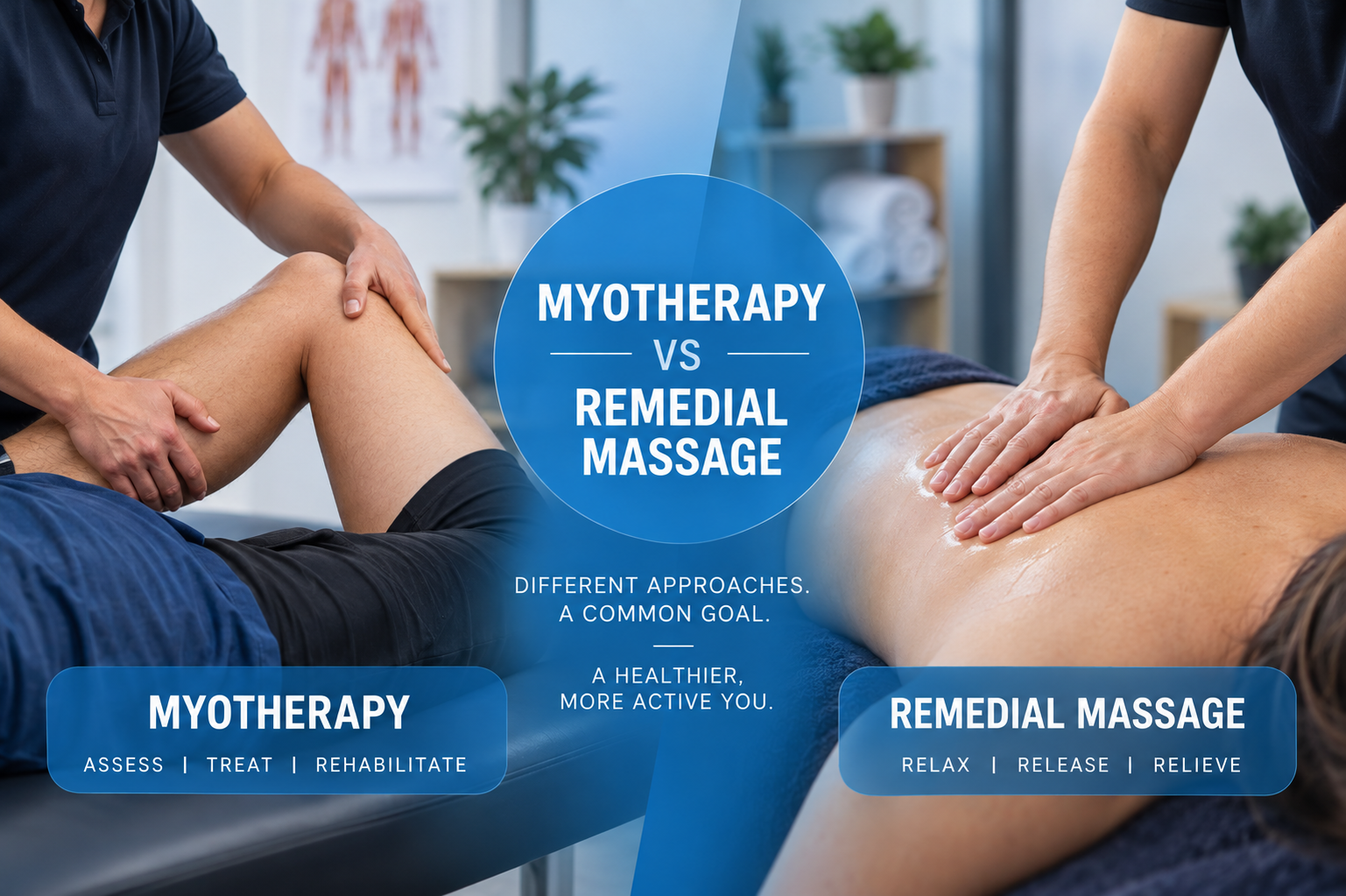
Muscle tightness, stiffness and recurring aches are common reasons people seek hands-on treatment. If you have started looking at your options, you may have come across both myotherapy and remedial massage.
At first glance, the two can appear very similar. Both may involve hands-on treatment of muscles and other soft tissues, and both may be used by people experiencing muscular discomfort, restricted movement or exercise-related soreness.
However, there are some differences in how myotherapy and remedial massage are commonly approached, particularly when it comes to assessment, treatment planning and rehabilitation.
So, what is the difference between myotherapy vs remedial massage, and how do you know which approach may suit your needs?
In this guide, we explain how the two services compare, what you might expect during an appointment and when it may be worth considering a myotherapy assessment.
What Is Myotherapy?
Myotherapy is a form of musculoskeletal healthcare that focuses on assessing and managing pain, muscle dysfunction and movement restrictions.
Rather than focusing only on the area that feels sore, a myotherapist may look at how muscles, joints and movement patterns are interacting and whether other areas may be contributing to your symptoms.
For example, someone experiencing recurring shoulder discomfort may have tight or irritated tissues around the shoulder itself, but their posture, upper back mobility or repetitive work activities may also be relevant.
A myotherapy appointment will therefore commonly begin with an assessment before treatment is recommended.
Depending on the findings and the individual practitioner, treatment may include techniques such as:
- Soft tissue therapy
- Trigger point therapy
- Myofascial techniques
- Dry needling
- Stretching
- Joint mobilisation
- Movement and mobility exercises
- Strengthening exercises
- Advice about activity, posture or load management
The treatment used should depend on your individual presentation rather than applying the same approach to everyone.
If you are looking for this type of care locally, you can learn more about Myotherapy in Geelong.
What Is Remedial Massage?
Remedial massage is a form of hands-on soft tissue therapy commonly used for muscular tightness, soreness and tension.
A remedial massage therapist may use a variety of massage techniques to work on specific muscles or areas of the body that feel tight, uncomfortable or restricted.
Treatment can vary considerably depending on the therapist, but techniques may include:
- Deep tissue massage
- Soft tissue massage
- Trigger point work
- Stretching
- Myofascial techniques
- Sports massage techniques
Some remedial massage therapists also conduct movement assessments and provide home exercises, so there can be considerable overlap between remedial massage and myotherapy.
The difference is therefore not simply that one involves massage and the other does not.
Myotherapy vs Remedial Massage: What Is the Main Difference?
The biggest difference often comes down to the scope and structure of the assessment and treatment plan.
Myotherapy generally places a strong emphasis on assessing musculoskeletal function before deciding how the problem should be managed.
This can involve considering:
- Where you experience pain or discomfort
- When the symptoms started
- Which movements aggravate the problem
- Your work or training demands
- Previous injuries
- Joint mobility
- Muscle flexibility
- Strength
- Movement patterns
- Activities you want to return to
Remedial massage may also involve an assessment, but appointments often place greater emphasis on treating soft tissue tension and muscular discomfort through massage-based techniques.
There is significant crossover between the two, and the exact experience will depend on the individual practitioner, their qualifications and the way they work.
Is Myotherapy Just a Deeper Massage?
Not necessarily.
Massage techniques can certainly form part of myotherapy treatment, but myotherapy is generally broader than simply applying more pressure.
A myotherapist may decide that deep massage is not appropriate for a particular problem.
Instead, treatment could involve a combination of manual therapy, dry needling, mobility work and exercises designed to address factors contributing to the person’s symptoms.
More pressure also does not automatically mean better treatment. Effective care should be based on what is appropriate and comfortable for the individual.
Does Myotherapy Include Remedial Massage?
It can.
Myotherapists commonly use soft tissue and massage techniques where appropriate, which means part of a myotherapy appointment may feel similar to a remedial massage.
However, massage may only be one component of the overall treatment.
For example, someone experiencing recurring calf tightness from running might receive soft tissue treatment to help manage muscular tension. The myotherapist may also assess ankle mobility, calf strength, training volume and other factors that could be contributing to the problem.
This broader assessment and rehabilitation component is one of the reasons people sometimes choose myotherapy when an issue keeps returning.
What Conditions May People See a Myotherapist For?
People seek myotherapy for many different musculoskeletal complaints.
These may include:
Neck and Shoulder Tension
Long hours at a desk, repetitive work and changes in activity levels can contribute to muscular tension around the neck and shoulders.
A myotherapist can assess the affected muscles and movement of the surrounding areas before developing an appropriate treatment plan.
For persistent neck symptoms, it may also be helpful to understand whether another form of assessment is appropriate. You can read more about chiropractic care for neck pain.
Lower Back Discomfort
Lower back pain can have many different contributing factors.
Muscle tightness may be part of the problem, but hip mobility, physical workload, exercise habits and other musculoskeletal factors may also need to be considered.
You can also learn more about chiropractic care for low back pain.
Sports and Exercise-Related Soreness
Training places stress on muscles and joints, which is a normal part of exercise. Problems can arise when pain persists, performance is affected or an area repeatedly becomes irritated.
Myotherapy may form part of a broader recovery and rehabilitation plan.
Active people dealing with recurring sports-related problems may also benefit from learning more about Sports Chiropractic in Geelong.
Muscle Tightness and Trigger Points
Muscles can sometimes feel tender, tight or sensitive in particular areas.
A myotherapist can assess whether these areas appear related to your symptoms and determine whether soft tissue treatment, movement work or another approach is appropriate.
Repetitive Work-Related Discomfort
Repeated lifting, prolonged computer use, manual work and repetitive movements can place ongoing demands on particular areas of the body.
Treatment may therefore need to address more than the painful muscle itself.
Your myotherapist may also discuss work habits, movement, exercises or other strategies that could help reduce repeated irritation.
What Happens During a Myotherapy Appointment?
A myotherapy appointment will usually begin with a discussion about why you have come in.
Your practitioner may ask about:
- Where you feel discomfort
- How long it has been present
- Activities that make it better or worse
- Your occupation
- Exercise and sporting activities
- Previous injuries
- Your general health
- What you hope to achieve from treatment
Depending on your symptoms, the myotherapist may then assess movements, muscle function, joint mobility or other relevant areas.
This assessment helps guide treatment.
For example, two people may both arrive with shoulder pain but have very different contributing factors. One may have developed symptoms after increasing gym training, while another may spend eight hours a day working at a computer.
Their treatment and rehabilitation plans may therefore be different.
What Happens During a Remedial Massage Appointment?
A remedial massage appointment may also begin with a discussion and physical assessment.
The therapist will generally identify the areas requiring treatment and use massage and soft tissue techniques accordingly.
The session may focus heavily on reducing muscular tension and improving comfort in the affected area.
Again, individual practitioners work differently. Some remedial massage therapists incorporate extensive assessment, mobility exercises and rehabilitation advice into their appointments.
This is why the practitioner’s individual approach can sometimes matter just as much as the title of the service.
Myotherapy vs Remedial Massage for Sports Recovery
Both services can potentially play a role in supporting physically active people.
Remedial massage may be useful when the primary goal is addressing general muscle tightness or soreness associated with training.
Myotherapy may be particularly useful where there is a recurring problem that requires additional assessment.
For example, if the same hamstring continually feels tight every time you increase running distance, repeatedly massaging the hamstring may provide temporary relief without necessarily explaining why the problem continues.
A broader assessment may consider strength, mobility, training load and movement patterns.
This does not mean every tight muscle indicates an underlying injury. Sometimes muscles are simply responding normally to increased activity.
However, symptoms that repeatedly interrupt training may warrant a professional assessment.
What About Dry Needling?
Dry needling is one technique that may be used during myotherapy treatment when considered appropriate by the practitioner.
It involves inserting very fine needles into selected muscles or tissues.
Not every myotherapy appointment requires dry needling, and it should not automatically be considered the main treatment for muscular pain.
Some people prefer other treatment options, and your practitioner should discuss suitable approaches with you before treatment.
Is Myotherapy Painful?
Treatment should not simply be judged by how painful it feels.
Some areas may feel tender when irritated muscles or sensitive tissues are treated, but excessive discomfort is not required for treatment to be worthwhile.
Communication between you and your practitioner is important.
If a technique feels uncomfortable, tell your practitioner. Treatment can usually be modified based on your comfort and individual needs.
Which Is Better: Myotherapy or Remedial Massage?
There is no single option that is automatically better for everyone.
The right choice depends on what you are experiencing and what you want from the appointment.
Remedial massage may be suitable if:
- You are mainly experiencing general muscular tightness
- You want hands-on soft tissue treatment
- Your muscles feel sore after work, exercise or daily activity
- You prefer a treatment session primarily focused on massage
Myotherapy may be worth considering if:
- The same problem repeatedly returns
- Pain is affecting movement or activity
- You want a broader musculoskeletal assessment
- You are recovering from a musculoskeletal injury
- You would like treatment combined with exercises or rehabilitation
- You want to understand possible factors contributing to your symptoms
The most appropriate approach depends on the individual, and there can be significant overlap between the two services.
When Should You Have Persistent Muscle Pain Assessed?
Minor muscle soreness following unusual physical activity commonly settles over time.
However, consider seeking professional assessment if symptoms:
- Continue for longer than expected
- Keep returning
- Affect work, exercise or everyday activities
- Are gradually becoming worse
- Restrict your movement
- Started following an injury
- Are accompanied by weakness, numbness or tingling
Severe pain, significant trauma, sudden weakness, unexplained neurological symptoms or other concerning symptoms should be assessed promptly by an appropriate healthcare professional.
Myotherapy and Chiropractic Care
Myotherapy and chiropractic care can sometimes complement each other because they may focus on different aspects of musculoskeletal function.
For example, chiropractic care may involve assessment of joints, movement and musculoskeletal function, while myotherapy may place greater emphasis on muscles, soft tissues and rehabilitation.
At Empowered Health Chiropractic, having different practitioners working within the same clinic can also make communication easier when a collaborative approach is appropriate.
You can learn more about the clinic’s broader approach through Musculoskeletal Support in Geelong.
Choosing a Myotherapist in Geelong
When choosing a practitioner, look beyond simply searching for the strongest massage or quickest treatment.
A good clinical experience should involve taking the time to understand your symptoms, explaining the assessment findings and discussing the available treatment options.
You should also feel comfortable asking questions such as:
- What do you think may be contributing to my symptoms?
- What treatment do you recommend?
- Why are you recommending this treatment?
- Are there exercises I can do between appointments?
- How will we know whether treatment is helping?
- Should another healthcare professional assess this problem?
Clear communication can help you understand your care and make informed decisions about your treatment.
Looking for Myotherapy in Geelong?
If muscle tightness, discomfort or restricted movement keeps interfering with your everyday activities, exercise or work, simply putting up with it may not be the best option.
A myotherapy assessment can help identify the areas involved, consider factors that may be contributing to your symptoms and develop an individual treatment plan.
At Empowered Health Chiropractic, our approach to Myotherapy in Geelong combines assessment, hands-on treatment and rehabilitation strategies based on your individual needs.
Learn more or book an appointment here:
https://empoweredhealthchiropractic.com.au/myotherapy-geelong/
Frequently Asked Questions
What is the difference between myotherapy and remedial massage?
Both myotherapy and remedial massage can involve hands-on soft tissue treatment. Myotherapy generally places additional emphasis on musculoskeletal assessment, identifying potential contributing factors and incorporating rehabilitation or exercise where appropriate. There can still be considerable overlap between the two depending on the practitioner.
Is myotherapy the same as massage?
No. Massage techniques can form part of myotherapy, but myotherapy may also include physical assessment, dry needling, joint mobilisation, stretching, mobility exercises and rehabilitation strategies.
Is myotherapy better than remedial massage?
Neither is automatically better. Remedial massage may suit someone primarily seeking treatment for general muscular tension, while myotherapy may be worth considering for recurring pain, movement restrictions or problems that require a broader musculoskeletal assessment.
Can myotherapy help with muscle tightness?
A myotherapist can assess muscle tightness and determine whether techniques such as soft tissue therapy, mobility work, stretching or exercise may be appropriate. They may also consider why the tightness keeps occurring rather than focusing solely on the tight muscle.
Does myotherapy include dry needling?
Dry needling may be offered as part of myotherapy when appropriate, but it is only one possible treatment technique. Not every condition or patient requires dry needling.
Do I need a referral to see a myotherapist?
People generally book directly with a myotherapist without first obtaining a referral. If you are receiving treatment through a particular funding, insurance or care arrangement, check whether additional documentation or eligibility requirements apply.
How many myotherapy sessions will I need?
There is no fixed number. It depends on the nature and duration of your symptoms, contributing factors, your response to treatment and your individual goals. Your practitioner should discuss your treatment plan with you after assessment.
Can I have myotherapy if I already see a chiropractor?
Potentially, yes. Myotherapy and chiropractic care may sometimes be used together as part of a broader musculoskeletal treatment plan. Your practitioners can determine whether a combined approach is appropriate for your individual situation.
Should I choose myotherapy for sports injuries?
Myotherapy may be useful when a sports-related problem involves muscular discomfort, restricted movement or rehabilitation needs. More significant injuries may require assessment by other healthcare professionals, imaging or additional management depending on the circumstances.
When should I see a doctor rather than a myotherapist?
Seek appropriate medical assessment if you experience severe or rapidly worsening pain, significant trauma, unexplained weakness, persistent numbness, loss of function, fever or other unusual or concerning symptoms.